
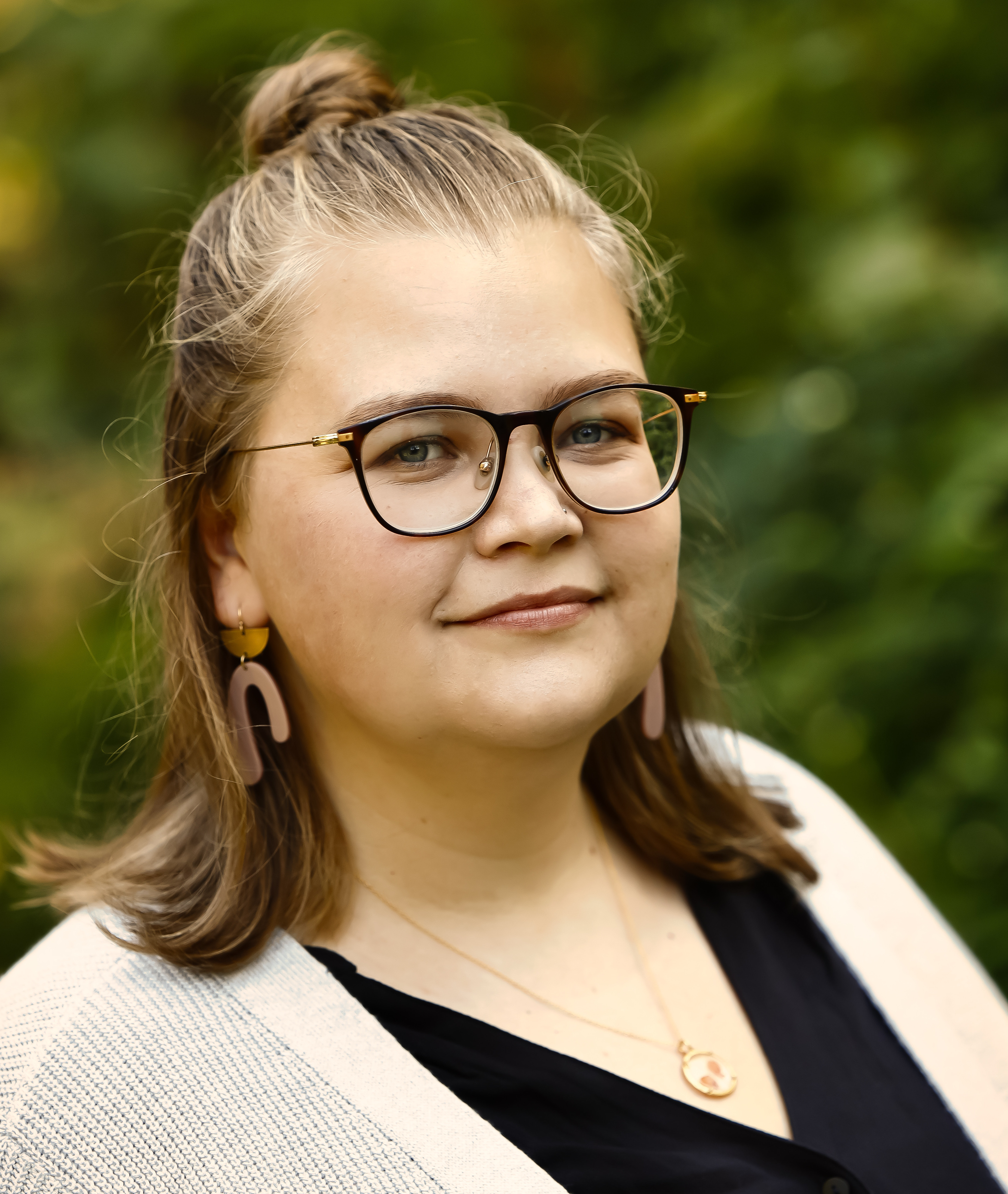
 I am a feminist urban geographer and critical housing scholar. My research helps us to understand renters’ experiences of housing and climate crises and the role of housing-as-care as we strive to create an equitable housing system that meets diverse housing needs. I am a Postdoctoral Research Fellow working in the School of Kinesiology and Centre for Climate Justice at the University of British Columbia. I am also a Research Associate with the UVic Right to Housing research cluster, a researcher with the Centre for Environmental Health Equity, and an editor with Radical Housing Journal.
I have expertise in feminist care geographies, urban housing politics (landlord-tenant laws and housing co-ops in particular), housing impacts on health, and impacts of climate change on renters’ health and wellbeing. These projects focus on Vancouver, B.C. and Seattle, W.A. and centre renters’ experiences and knowledge of their housing. My research is guided by a intersectional, feminist perspective informed by work on anti-racism and decolonization. Journals where my work has been published include: Antipode, Gender, Place & Culture, Urban Geography, EPD: Society and Space, and the Radical Housing Journal.
At UBC, my work is part of the HEAT Research Collective and the Centre for Climate Justice. This work allies with tenant-serving organizations and research participants in the Lower Mainland to generate research that examines impacts of intersecting housing and climate crises on tenants. This includes measuring indoor environmental quality in multi-residential buildings, evaluating impacts of “climate safe” rooms, monitoring unanticipated impacts of climate adaptation policy, and identifying mechanisms that lead to climate-related rent increases/evictions.
I am also the lead PI on a project entitled “Impacts of housing co-ops on renters’ experiences of housing crises.” Dr. Jeff Masuda and I collaborate on this project, which is supported by a SSHRC Insight Development Grant. We explore co-op residents’ experiences of living in Vancouver co-operatives, with attention to the role of community and support in co-ops, perspectives on the future of Vancouver’s housing co-ops, and impacts of housing and climate crises on co-op experiences. The project considers Vancouver’s housing co-ops in contemporary and historical contexts, drawing on methods such as qualitative interviews and archival research. Further information about the study, as well as study results as they are available, can be accessed at Housingcoopresearch.ca.
Prior to my current role, I was a Postdoctoral Fellow at the University of Victoria in the School of Public Health and Social Policy where I worked with Dr. Jeff Masuda, supported by the CMHC-SSHRC Housing Research Training Award. I received my Ph.D. in Geography from the University of Washington in 2023 (Supervisor: Dr. Sarah Elwood).
My dissertation, supported in part by the Social Sciences and Humanities Research Council of Canada (SSHRC), was titled Caring in Crises: Spatializing Infrastructures of Care through Tenant Protections. I focused on the ways that local state care infrastructure, such as landlord-tenant laws, shape tenants’ experiences of housing crises in Vancouver, BC and Seattle, WA. I received my M.A. in Geography from Simon Fraser University in 2018 (Supervisor: Dr. Eugene McCann.). My thesis, also supported in part by SSHRC, is titled, ‘It’s yours’: Tenant experiences of home and care in women’s non-profit housing. I use a feminist geographical framework to explore relationships between the co-production of home and care work in women’s housing.
My research occurs on unceded Coast Salish land, on the territories of the Musqueam, Squamish, and Tsleil-Waututh First Nations (Vancouver) and Duwamish, Muckleshoot, Suquamish, and Tulalip territories (Seattle). In recognizing the land we are on, we acknowledge that the land was stolen from these First Nations by settler colonizers, and as such these remain Indigenous lands.
Photo credit: Karl Varga
 Samantha Thompson